🟧 2026 Operating Levy Information
Maintaining Strong Schools for St. Charles
On November 3, 2026, St. Charles voters will decide whether to approve a new operating levy. This website provides factual information about why the levy is being proposed, how school funding works, the steps the district has already taken to reduce costs, and what the proposal would mean for our schools and community.
Explore the information below to learn about the district's financial outlook, declining enrollment, budget reductions, tax impact, and frequently asked questions.
Election Information
Tuesday
November 3,
2026
✓ Operating Levy Referendum
📅 Informational Meetings
(coming soon)
↓ Scroll to learn more
THE CASE, IN FIVE POINTS
Here's the short version
The Core Challenge: Enrollment and Funding
The districts largest source of revenue is based on student enrollment - approximately 83% of the revenue public schools receive. As enrollment declines, state funding declines — even though buildings, buses, and staffing don't scale down at the same rate.
Then
Now
1,008
875
Approximate state funding per student
Enrollment change - 1,008 (2022) → ~875 (2027) students
$10,000
−133 students (-13.2%)
Estimated annual revenue impact (2022-2027)
−$1,330,000
Local Context: Approximately 90% of children living within the district attend St. Charles Public Schools. Recent statewide declines in birth rates and affordability challenges for young families have contributed to lower student enrollment across many Minnesota communities.
State Funding Hasn't Kept Pace with Inflation
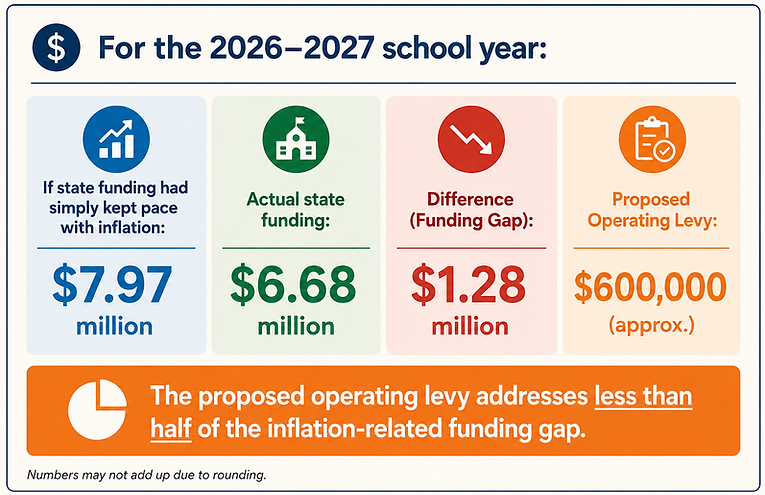
Minnesota's basic education funding has not kept pace with inflation for more than 20 years. While schools continue to receive annual funding increases, those increases have consistently been smaller than rising costs. Today, districts receive about 18.6% less purchasing power per student than if funding had simply kept pace with inflation.

What does this look like for the 2026-2027 school year - St. Charles enrollment of approximately 875-students
Fiscal Responsibility: Actions Already Taken
Every budget decision represents real people, real programs, and real opportunities for students. Before asking voters to consider an operating levy, the district first took significant steps to reduce costs and improve its financial outlook. Beginning in January 2023, difficult decisions were made to strengthen the district's finances while continuing to prioritize student learning whenever possible.
Rebuilt District Fund Balance
−3.83% → +9%
Reduced 8 classroom teaching positions
~$704,000 annual savings
Reduced total district staff count
131 → 111 employees (15%)
Budget cuts to supplies, athletics, transportation, and other areas
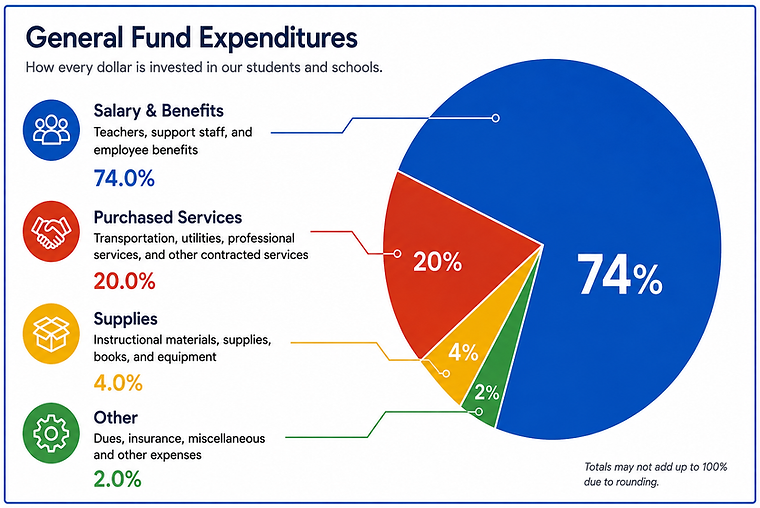
Approximately 74% of the district's General Fund budget supports teachers, educational support staff, and employee benefits. Because personnel costs represent the district's largest expense, balancing the budget required difficult staffing decisions.
The Road Ahead: The district has taken significant steps to reduce costs and strengthen its financial position. Without additional local revenue, maintaining that progress will require increasingly difficult decisions that impact students, staff, and programs.
My Tax Impact: Estimate Your Cost
Every property is different. Use the calculator below to estimate how the proposed operating levy may affect your property's annual and monthly taxes.
For a home with an estimated market value of $300,000, the proposed operating levy would cost approximately $22 per month (about $264 per year).
Applies for taxes payable in 2027 based on market value of property in the school district, as defined by Minnesota Statutes, Section 126C.01, Subdivision 3.
NOTE: Agricultural property will pay taxes for the proposed referendum based only on the value of the house, garage and one acre. Seasonal recreational residential property (i.e., cabins) will pay no taxes for the proposed referendum.
Looking for your property's actual estimated market value? Tax Impact Calculator
Future Impact: With vs. Without the Levy
The district has prepared projected budgets with and without an operating levy to help illustrate the potential impact of each scenario. The comparisons below highlight the priorities the district hopes to protect and the areas that may require additional reductions if the levy is not approved. - See Breakdown
The comparison below highlights what the district would work to protect with additional operating support and what may be at risk without it.
District Comparisons: How St. Charles Compares
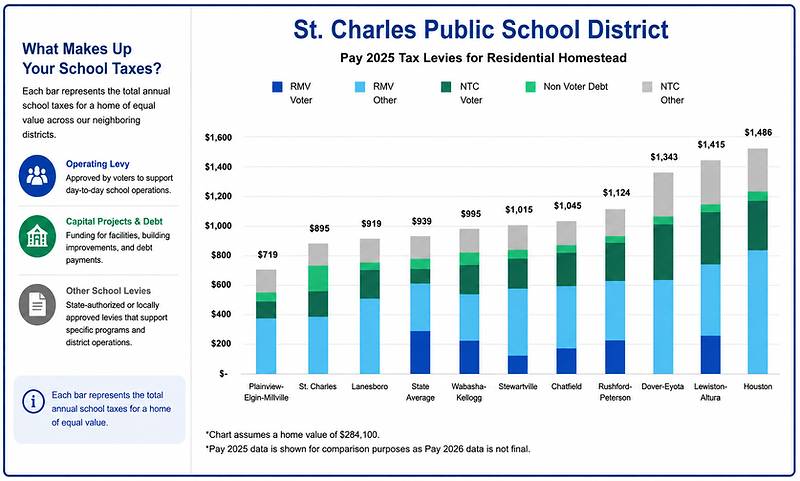
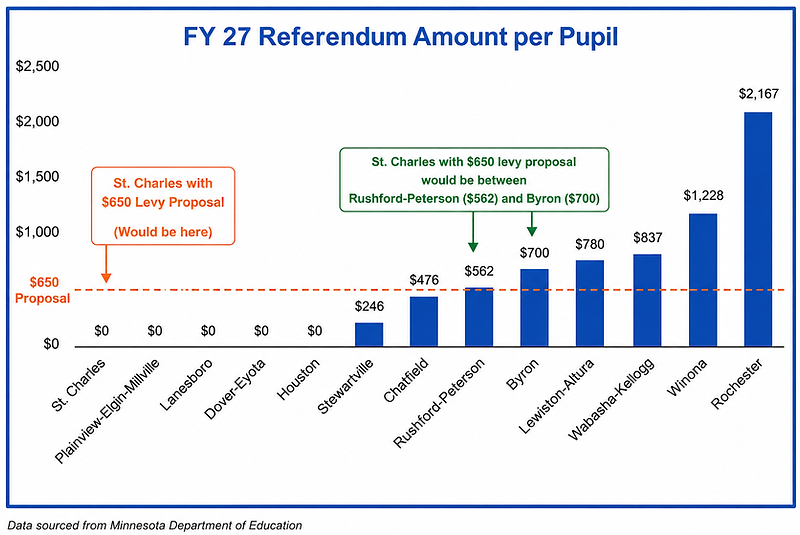
School funding challenges are not unique to St. Charles. Across Minnesota, many districts have turned to their communities for additional operating support as costs have increased faster than available revenue. The comparisons below help show where St. Charles currently stands, how our school taxes compare with neighboring districts, and where the proposed operating levy would fit within the region.
73%
of Minnesota school districts currently have an operating levy in place. St. Charles is among the minority that does not.
The charts bellow illustrate how a school tax bill is made up, how St. Charles compares with neighboring districts, and how St. Charles would rank with the proposed $650 operating levy.